
And that word could make compliance a little more practical for organizations.
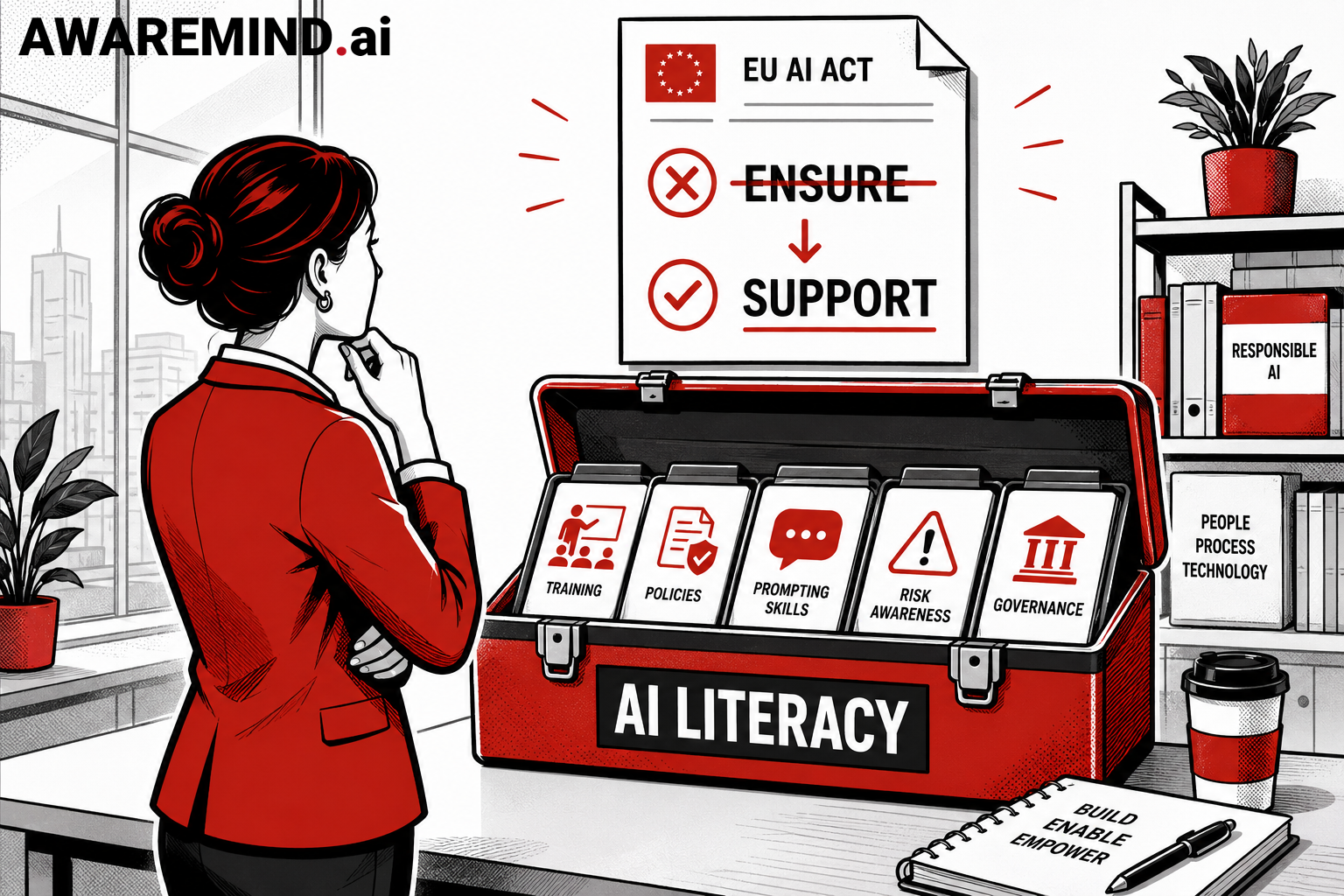
In the final Digital Omnibus compromise text agreed in May 2026 (Council Document 9247/26), the AI literacy requirement remains in place but "ensure" has been replaced with "support."
Original Article 4: Providers and deployers must take measures to "ensure" a sufficient level of AI literacy among staff.
Revised Article 4: Providers and deployers must take measures to "support the development" of AI literacy among staff.
Why does this matter?
The focus shifts from guaranteeing a specific baseline of employee knowledge to showing that your organization is actively providing the training and resources to help them get there. That's a more practical approach for organizations operating in a rapidly evolving AI landscape.
And regardless of compliance, AI literacy remains good practice:
• It reduces "Shadow AI" risks and poor data handling practices
• It improves adoption and ROI from AI investments
• It helps employees identify hallucinations, bias, and other AI-related risks
The bigger lesson may be that AI literacy is being treated less as a compliance endpoint and more as an organizational capability.
The question is no longer just what your employees know about AI today. It's whether your organization is actively helping them learn and prepare for the future.